Food Additives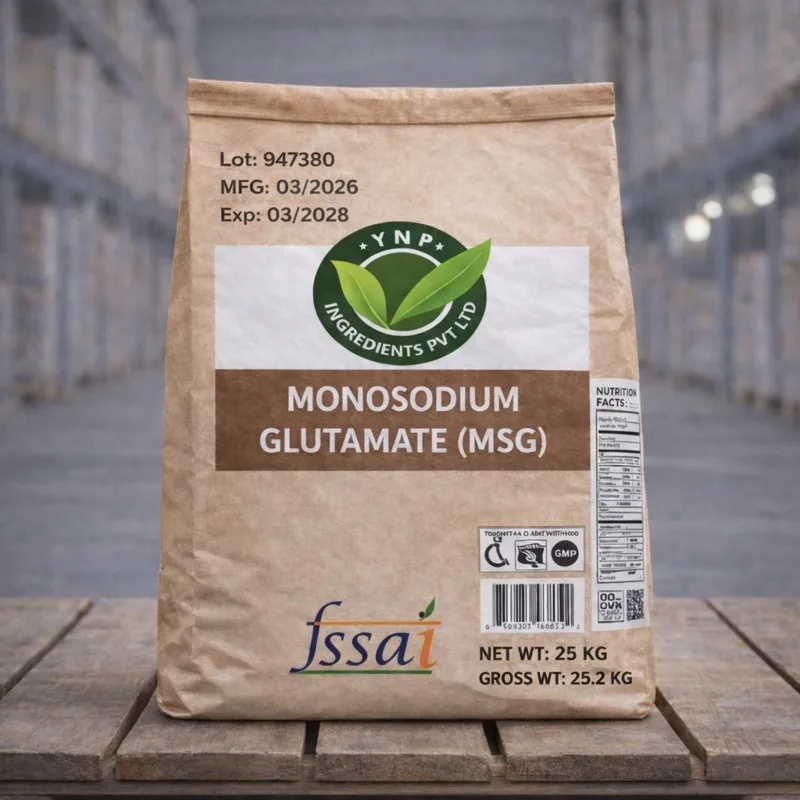
Flavor Enhancers
China
Monosodium Glutamate (MSG)
Monosodium Glutamate (MSG) is produced by bacterial fermentation of molasses or starch and is the chemically pure form of the glutamate naturally present in tomatoes, aged cheese, soy sauce, and mushrooms. The glutamate anion activates the taste receptor mGluR4 and other umami receptors on taste buds, generating the fifth basic taste — umami — that amplifies savory, meaty, and broth-like flavors in food. MSG also enables sodium reduction: research demonstrates that replacing 25–40% of NaCl with MSG while maintaining palatability reduces total sodium content significantly, supporting heart health positioning.
CAS Number142-47-2
GradeFood Grade (E621)
Origin / SourceChina
Packaging FormPaper Bag
AppearanceWhite crystalline granules
Package Size25 Kg Paper Bag
FSSAI CompliantPremium GradePan-India Delivery15+ Years
Key Benefits
- Activates umami taste receptors — the fifth basic taste — enhancing depth and savory complexity.
- Enables 25–40% sodium reduction when used as a partial NaCl replacement without palatability loss.
- Fermentation-derived from plant sources — clean manufacturing origin.
- Intensifies perceived flavor across a wide concentration range without contributing objectionable taste at recommended doses.
- GRAS (FDA), E621 (EU), and widely approved globally under Codex Alimentarius.
Applications
Seasoning & SnackProcessed MeatsSoups & SaucesReady Meals
Common Usage
- ›Instant noodle seasoning sachets, soup bases, and bouillon powder formulations.
- ›Processed and cured meat products, sausages, and deli meat flavor systems.
- ›Savory snack coatings, chip seasonings, and fried food flavor applications.
- ›Restaurant-grade cooking salt blends and institutional food service seasoning.
Technical Documents
Request the specification sheet, COA, or technical data sheet for Monosodium Glutamate (MSG) directly from our team.