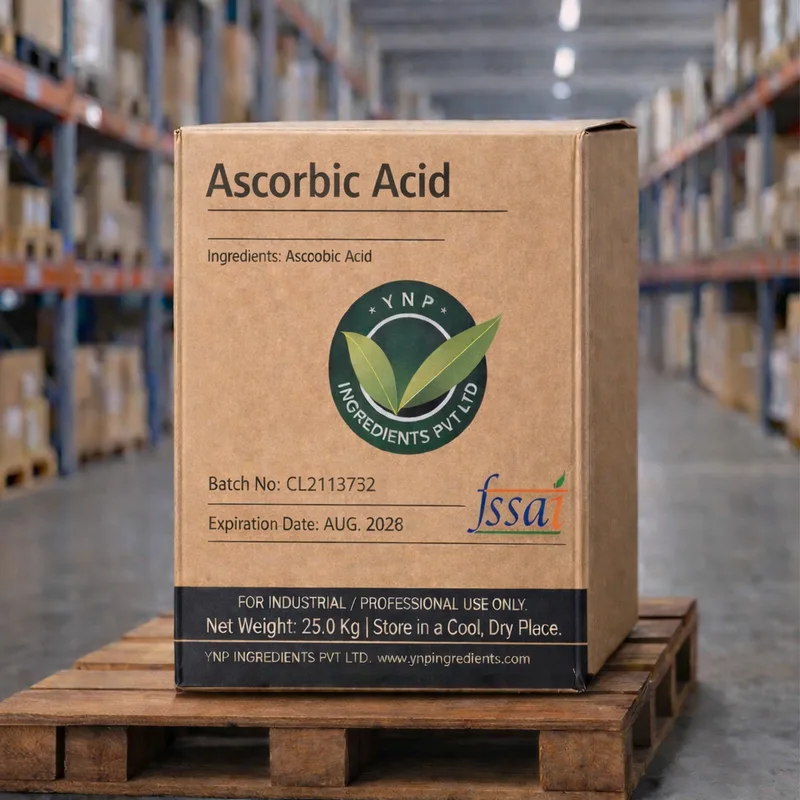
Ascorbic Acid (Vitamin C)
Ascorbic Acid (Vitamin C) is an essential water-soluble vitamin that humans cannot synthesize endogenously and must obtain through diet or supplementation. It functions as a primary water-phase antioxidant, protecting tissues from reactive oxygen species, and acts as a required cofactor for prolyl and lysyl hydroxylase enzymes in collagen cross-linking. In food manufacturing, it additionally functions as an antioxidant preservative (E300) that prevents oxidative browning in cut fruits, beverages, and fatty food systems. Global deficiency prevalence makes Vitamin C supplementation one of the highest-volume dietary supplement categories.
Key Benefits
- Essential cofactor for collagen hydroxylation — critical for skin, tendon, and blood vessel integrity.
- Primary water-phase antioxidant — neutralizes reactive oxygen species in extracellular fluids.
- Enhances non-heme iron absorption by reducing Fe³⁺ to Fe²⁺ in the gastrointestinal tract.
- Supports immune function — stimulates neutrophil migration and lymphocyte proliferation.
- Functions as food antioxidant (E300) — prevents browning and oxidative rancidity in food.
Applications
Common Usage
- ›Vitamin C tablets, effervescent sachets, gummies, and chewable supplement forms.
- ›Beverage fortification — juices, functional waters, and immunity drink formulas.
- ›Antioxidant preservation in packaged fruit products, frozen foods, and fatty systems.
- ›Multivitamin blends, immune support complexes, and clinical oral supplementation.
Technical Documents
Request the specification sheet, COA, or technical data sheet for Ascorbic Acid (Vitamin C) directly from our team.