Health Supplements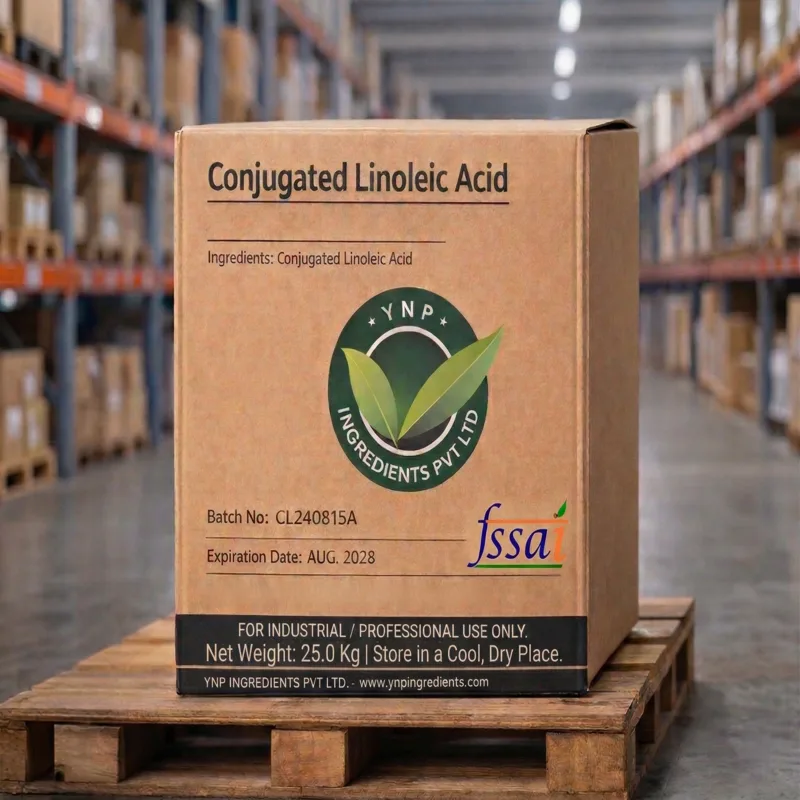
Fatty Acid Compounds
China
Conjugated Linoleic Acid (CLA)
Conjugated Linoleic Acid (CLA) is a collection of positionally and geometrically isomeric forms of linoleic acid (C18:2), most prominently the c9,t11 (rumenic acid) and t10,c12 isomers derived from safflower oil through alkaline isomerization. Research — concentrated on the t10,c12 isomer — demonstrates reduction in body fat mass, preservation of lean muscle mass, and modulation of adipocyte differentiation and lipid metabolism. CLA is most commonly delivered in softgel form due to its oily nature, with typical research-supported doses of 3–6g per day consumed across multiple servings.
CAS Number121250-47-3
GradeFood / Nutraceutical Grade
Origin / SourceChina
Packaging FormFiber Box
AppearancePale yellow oily liquid (softgel content)
Package Size20 Kg Fiber Box
FSSAI CompliantPremium GradePan-India Delivery15+ Years
Key Benefits
- Body composition improvement: reduction in fat mass with preservation of lean muscle in clinical trials.
- t10,c12 isomer modulates PPARγ signaling in adipocytes — inhibiting fat storage mechanisms.
- c9,t11 isomer (rumenic acid) demonstrates immune-modulatory and anti-inflammatory properties.
- Non-stimulant weight management active — suitable for stimulant-free formulations.
- Standardized minimum 78% CLA content from safflower oil — consistent and traceable.
Applications
Weight ManagementSports NutritionImmune HealthBody Composition
Common Usage
- ›Body composition and weight management softgel supplement products.
- ›Non-stimulant fat-loss formulas for health-conscious consumer segments.
- ›Sports nutrition lean mass support products and physique competition supplementation.
- ›General wellness products combining CLA with omega-3 or green tea extract.
Technical Documents
Request the specification sheet, COA, or technical data sheet for Conjugated Linoleic Acid (CLA) directly from our team.